
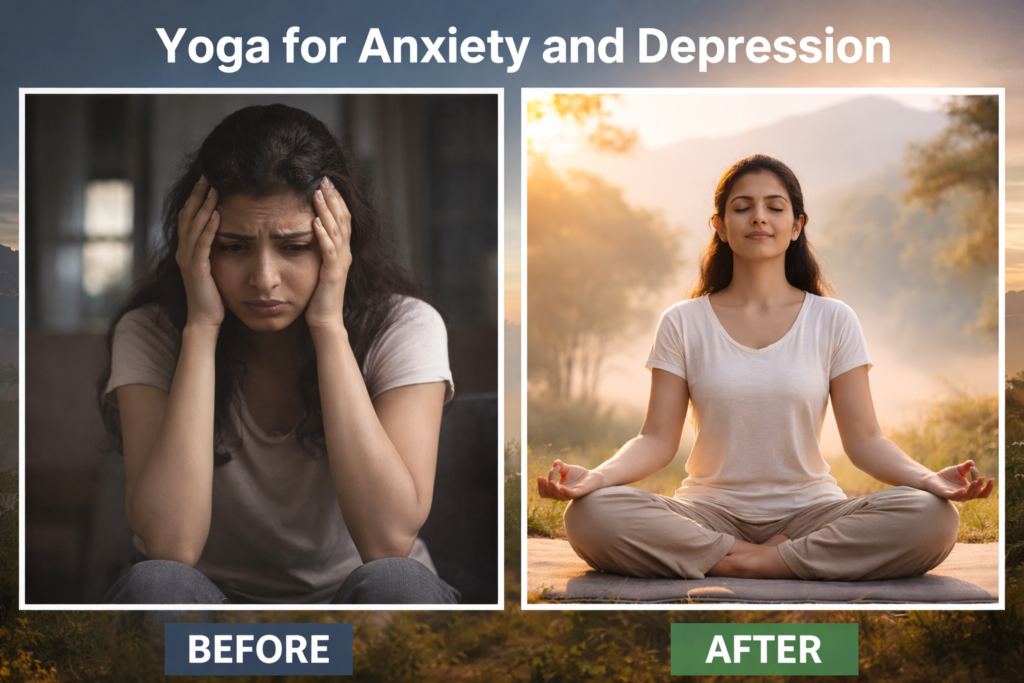
In today’s fast-paced life, mental distress has become very common. Feeling unreasonable, feeling anxious, feeling down, and not being able to concentrate on anything—these can all be symptoms of anxiety and depression. Many people ignore these symptoms or become dependent on medication.
But the truth is that yoga for anxiety is a natural, safe, and easy way to find peace of mind and restore balance in life.
This blog is specifically for those who are not very educated but want an easy and natural solution to their mental problems.
What is Anxiety and Depression? (In Simple Terms)
Anxiety results in persistent anxiety and irrational fears and heart rate increases and sleep disturbances.
Depression remains as a condition which causes extended periods of sadness and complete loss of pleasure and persistent exhaustion.
The two conditions affect both mental functions and breathing patterns. For this reason mental health yoga provides effective treatment for these conditions.
What benefits does yoga provide for people who experience anxiety and depression?
Yoga functions as a complete system which includes physical movements and mental relaxation techniques.
- Yoga practices create a state of breathing that becomes deeper and slower than normal.
- The process helps to eliminate all negative thoughts from our mind.
- The process helps to decrease all mental stress.
- The process helps to enhance sleeping patterns.
- The combination of these effects makes yoga an effective treatment for both depression and anxiety.
The most effective yoga poses for treating anxiety
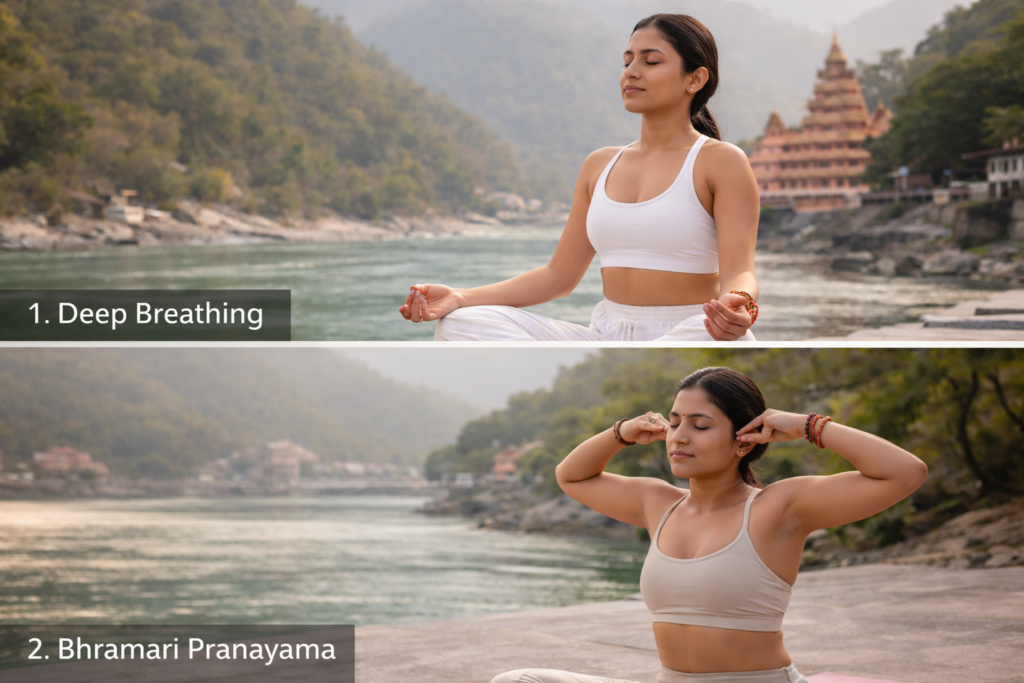
- Deep Breathing
The simplest method of breathing for anxiety relief exists through this practice.
How to do it:
- Sit comfortably.
- Take a deep breath through your nose.
- Hold your breath for 4 seconds.
- Exhale your breath in a slow manner.
- I will perform it between 10 and 15 minutes every day.
- The practice brings immediate mental peace.
- Bhramari Pranayama
The technique delivers quick relief from mental tension.
Benefits:
- Anxiety is reduced
- The mind achieves a state of equilibrium
- Anger and fear are reduced
- The practice serves as an effective method for achieving tranquility through yoga.
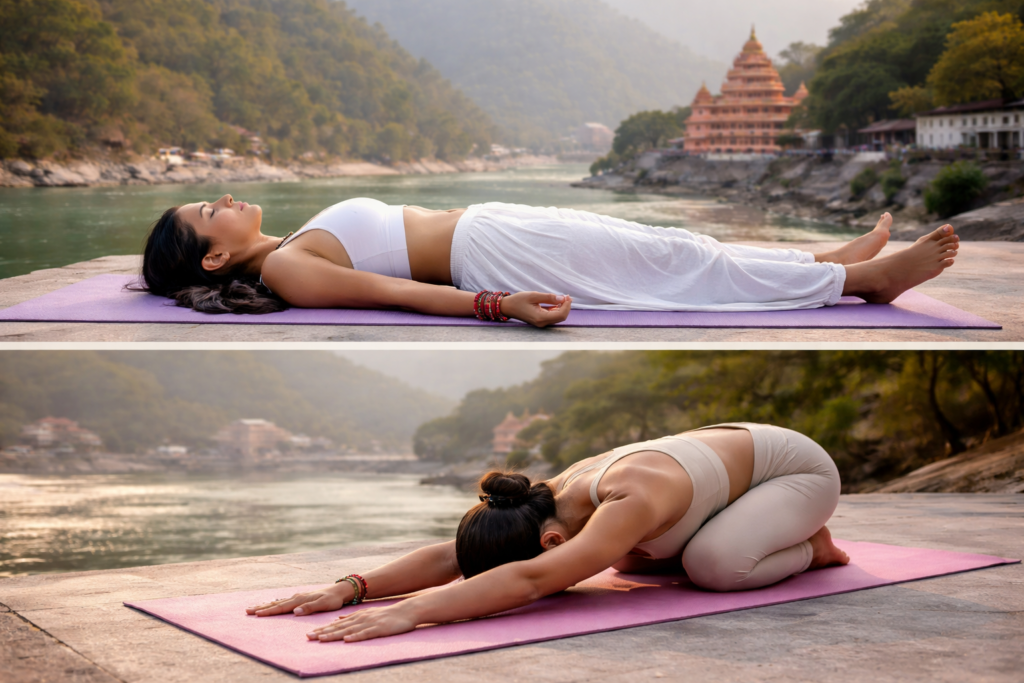
3. Child’s Pose
- The asana brings complete relaxation to both body and mind.
- The pose decreases the weight that people feel in their heads.
- The practice decreases both anxiety and fear.
- The asana provides a secure and simple practice for students.
4. Shavasana
- You must perform this activity after finishing your yoga practice.
- You should release all tension from every part of your body.
- Your main task is to focus on your breathing.
- Mental health yoga reaches its highest point through this particular practice.
- Yoga practice requires several essential elements to be followed by practitioners.
- Yoga should be practiced by individuals who have not eaten any food.
- You should begin your activities at a gradual pace.
- A daily practice of 20 to 30 minutes should meet your needs.
- You should not pressure yourself to continue.
The practice of yoga for anxiety requires regular practice which will result in visible changes within a period of two to three weeks.
Yoga vs. Medications
The body experiences instant relief from medications which become addictive over time. Yoga develops slowly because it works directly on fundamental problems.
Yoga serves as an effective long-term treatment method for depression and anxiety.
Is yoga safe for all ages?
- Yes.
Everyone from children to young people and elderly people can do yoga.
You should begin your practice with basic yoga postures.
Your conclusion shows a strong ending.
The combination of mental distress and rapid heartbeat and continuous sadness leads to your need for assistance.
Anxiety yoga practice brings you back to a state of peace and self-assurance and joyful existence.
Daily yoga practice brings life-changing results because yoga functions as a regular practice.
Your body needs 10 minutes of daily yoga practice which you should start right now.
Student ASK Questions-
- Does yoga for anxiety really work?
Regular yoga practice brings people considerable relief from their anxiety and nervousness symptoms.
- Which yoga is best for depression?
Bhramari Shavasana and deep breathing yoga exercises provide effective depression treatment.
- How long will it take to see results?
The first signs of change appear after two to three weeks while people achieve major results after one to two months.
- Can yoga be practiced without a teacher?
People can practice basic yoga and breathing techniques at home without needing a trainer.
- Why is breathing important for anxiety?
Because breathing directly calms the mind and nerves.
- Can yoga replace medication?
Yoga works for mild cases but people with severe conditions need to consult a doctor.